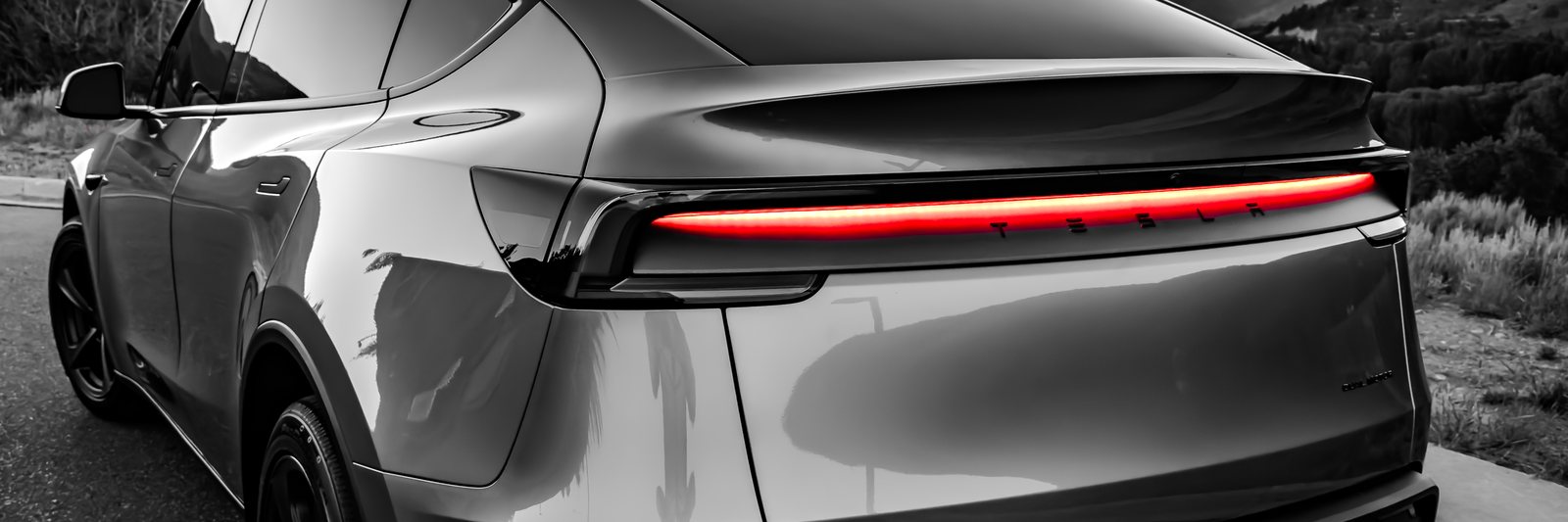
The Vail Valley is well set up for electric vehicles, with Tesla Superchargers in Edwards and Gypsum and public chargers from Vail to Eagle. Denver is about 100 miles from Vail, an easy summer trip on one charge; in winter, many drivers will want to stop halfway. Holy Cross Energy offers a home charger rebate. Colorado law protects a condominium owner's right to install a charger, but parking and electrical capacity still need answers. Tesla also has a store and service center in Gypsum.
Why this valley works for an EV
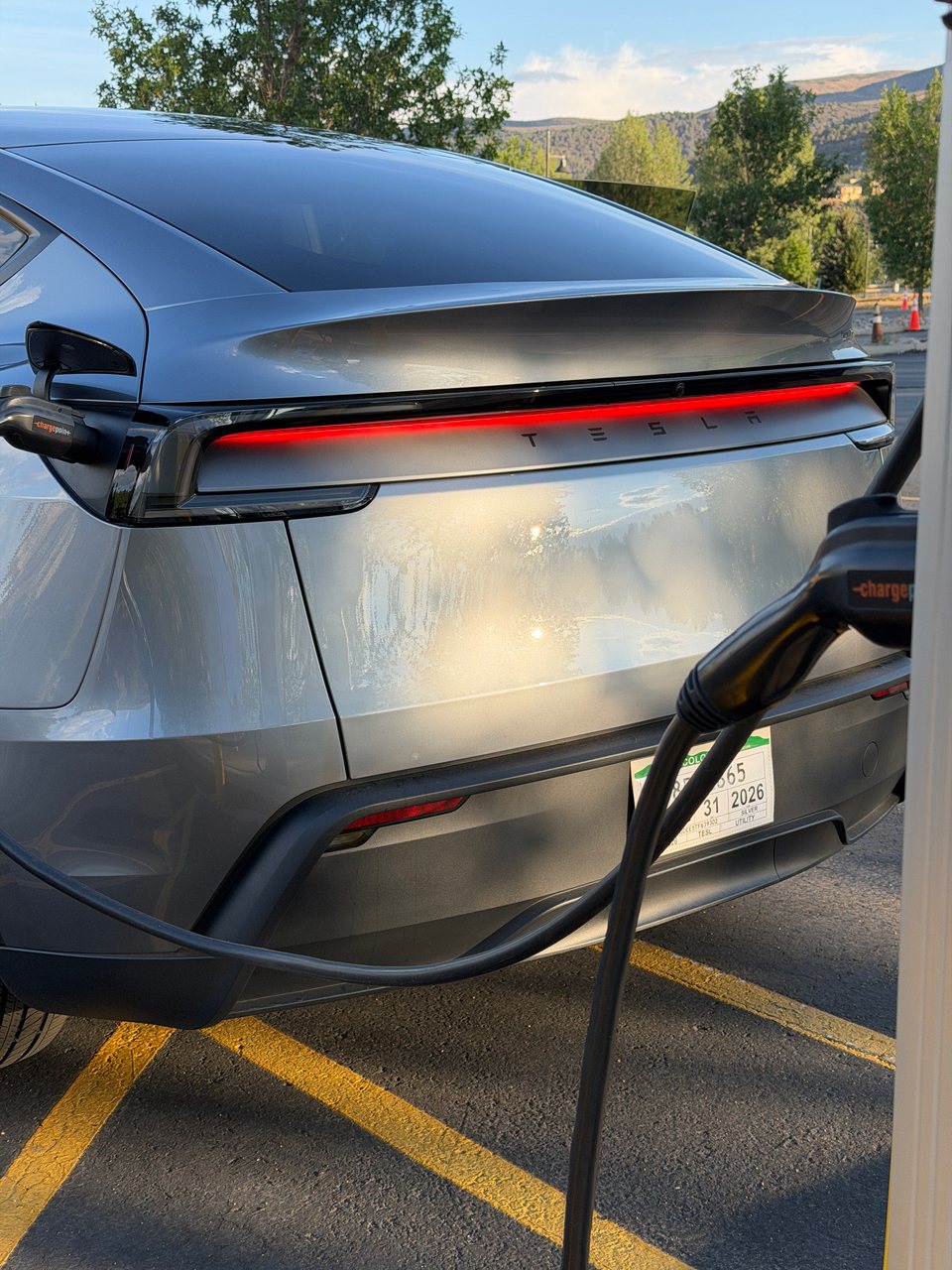
I drive a Tesla here, and I consider the charging network one of the valley's quieter advantages. Federal Department of Energy data listed 123 public charging station records between Vail and Gypsum when I checked in November 2026, with 239 Level 2 ports and 39 DC fast-charging ports. Those figures do not count the plug in your own garage, which is where most charging tends to happen.
Charger density, by the numbers
The density here is striking. Measured against the people who live here, the valley has roughly four times as many public charging ports as Colorado as a whole, and more than six times the national rate.
| Area | Public charging ports | Residents | Ports per 10,000 residents | One port for every |
|---|---|---|---|---|
| Vail to Gypsum, measured against all Eagle County residents | 278 | 54,291 | 51 | 195 people |
| Colorado | 7,985 | 6,012,561 | 13 | 753 people |
| United States | 263,804 | 341,784,857 | 8 | 1,296 people |
The fast-charging picture is similar: about 7 DC fast ports per 10,000 residents here, compared with about 3 statewide and 2 nationally. Two things are worth keeping in mind. This is a resort valley, so visitors share these ports and the number per person in a holiday week is much lower. Some listed ports, such as those at hotels, also have limited access. Charger counts are from Department of Energy data and residents from the Census Bureau's July 2025 estimates.
All of this can change at any time. Stations open and close, networks change who may use them, and utility programs, tax credits and rates can be revised or ended without much notice. The same is true of many rules described in this section of the site, so please confirm anything important before relying on it.
Live availability, pricing and broken stations change daily. I rely on PlugShare, the Tesla app and the ChargePoint app for that, and I would treat the tables below as a map of what exists and not a promise that a stall is open.
The three kinds of charging
| Type | Power source | Where you will find it | Best used for |
|---|---|---|---|
| Level 1 | Standard 120-volt outlet | Almost any garage | Slow overnight top-ups, and a fallback in a building without a charger |
| Level 2 | 240-volt circuit | Homes, garages, hotels and town parking | Overnight at home, or several hours while skiing or at dinner |
| DC fast charging | High-power commercial equipment | Superchargers and fast-charging sites along I-70 | Road trips, when you need to be moving again soon |
Connectors matter too. Tesla's connector is known as NACS, and many other new vehicles use CCS. Some Tesla sites are open to other brands and others are not. In the listings I reviewed, the Gypsum Supercharger is open to all vehicles and the Edwards site is enabled for partner vehicles. Check your own app before relying on a stop.
DC fast charging in the valley
| Town | Location | Operator | Fast ports |
|---|---|---|---|
| Edwards | 434 Edwards Access Road | Tesla Supercharger | 12 |
| Edwards | 434 Edwards Access Road | Electrify America | 4 |
| Edwards | Village Market area, Riverwalk, 34295 US-6 | ChargePoint | 1 |
| Gypsum | 150 Cooley Mesa Road | Tesla Supercharger | 8 |
| Gypsum | Eagle County Airport, 216 Eldon Wilson Road | ChargePoint | 2 |
| Gypsum | 800 Highway 6 | ChargePoint | 1 |
| Eagle | 112 Fairgrounds Road | ChargePoint | 1 |
| Eagle | 500 Broadway | Eagle County, non-networked | 1 |
| Avon | 220 East Benchmark Road | ChargePoint | 2 |
| Avon | 15 Eagle-Vail Road | ChargePoint | 1 |
| Minturn | 401 Main Street | ChargePoint | 1 |
| Vail | Lionshead parking, 395 South Frontage Road West | ChargePoint | 4 |
| Vail | 1300 Westhaven Drive | ChargePoint | 1 |
The Edwards and Gypsum Superchargers are the two I would point a Tesla driver toward first. The single-port sites are useful to know about, but with one stall a queue of one is already a wait.
Level 2 charging, town by town
| Town | Examples | Operators | Level 2 ports |
|---|---|---|---|
| Vail | Vail Village and Lionshead parking structures, Red Sandstone, Vail Racquet Club, and Tesla Destination chargers at hotels and lodges including the Four Seasons, Sonnenalp and Arrabelle | ChargePoint, Tesla Destination, Blink | 72 |
| Avon and Bachelor Gulch | Town Hall, Lake Street, East Benchmark, Walking Mountains, Traer Creek, the Elk Lot, the Westin and the Ritz-Carlton | ChargePoint, Tesla Destination | 47 |
| Beaver Creek | Village parking on Offerson Road, Park Plaza, Park Hyatt and Beaver Creek Lodge | ChargePoint, Tesla Destination | 16 |
| Edwards and Arrowhead | Freedom Park and the county commons, Colorado Mountain College, Riverwalk, Vail Health's Edwards campus, Arrowhead | ChargePoint, AmpUp, non-networked | 51 |
| Eagle | County buildings, the library and Justice Center | ChargePoint, non-networked | 42 |
| Gypsum | Airport administration, county service center and residential sites | ChargePoint | 8 |
| Minturn | Boulder Street and Railroad Avenue | ChargePoint | 3 |
A caution: listed as public does not always mean convenient. Hotel Destination chargers may be for guests, and some apartment or condominium sites appear in the data even though access is practically limited to residents. Parking fees may also apply on top of the cost of charging.
I-70 distances, east and west
These are approximate interstate miles, worked out from I-70 mileposts.
| Destination | From Edwards | From Vail | Fast charging there |
|---|---|---|---|
| East: Vail Pass, about 10,662 feet | 27 | 14 | None to count on at the summit |
| East: Frisco | 38 | 25 | Tesla at two sites, 8 and 12 stalls; Electrify America, 4 |
| East: Silverthorne | 42 | 29 | Tesla at two sites, 12 and 8 stalls; ChargePoint, 3 |
| East: Eisenhower Tunnel, 11,158 feet | 51 | 38 | The high point of the drive |
| East: Idaho Springs | 77 | 64 | Tesla, 8; Rivian, 10; Loop, 6; ChargePoint, 4 |
| East: Denver, at I-25 | 111 | 98 | Extensive |
| West: Eagle | 16 | 29 | ChargePoint and county sites |
| West: Gypsum and the airport | 23 | 36 | Tesla, 8; ChargePoint, 3 |
| West: Glenwood Springs | 47 | 60 | Tesla, 6; Electrify America, 4; ChargePoint, 4 |
| West: Rifle | 73 | 86 | Tesla, 12; ChargePoint, 4 |
Getting to Denver on a charge
In summer, with a reasonably full battery, I find Denver an easy trip on a single charge. At about 100 miles from Vail, it is well inside the range of most current EVs in decent conditions.
Winter is a different calculation. AAA has reported an average range loss of about 41% at 20 degrees Fahrenheit with the heater running, and some models do much better or worse than that. Here is a simple illustration, using made-up round numbers: a car rated at 300 miles could behave more like a 175-mile car on a very cold day. That still reaches Denver on paper, but paper does not include a storm, a closure, or an hour sitting in traffic with the heat on.
My practical view is that in winter it can be smart to stop about halfway and charge. Silverthorne and Frisco are good choices if you want to top up after the climb, and Idaho Springs works if you would rather do it farther along. This is driver discretion. Your car, your tires, the forecast and your own tolerance for a thin margin all count.
Keep the direction in mind too. Heading to Denver, you climb to the tunnel and then have a long descent. Coming home, you climb nearly 6,000 feet from Denver to the tunnel, so the return trip tends to be the harder one on the battery.
- Precondition the car while it is still plugged in, so the battery and cabin warm up on house power.
- Leave a buffer that assumes the road will stop for a while.
- Check CDOT's road conditions before leaving.
- Remember that an EV is subject to the same I-70 traction rules as anything else. See getting to the valley.
- Do not plan on arriving at a mountain charger with almost nothing left, in case every stall is taken or one is down.
Tesla in Gypsum
One detail surprises people from out of town: Tesla has a store and service center in the valley. Tesla Gypsum is at 550 Plane Street, across from the Eagle County airport area, at 970-687-0050. Tesla lists the store as open Monday through Saturday from 10 a.m. to 6 p.m., with a service center on site. For an owner, having service nearby means a trip to Gypsum instead of a day lost to Denver.
Charging at home with Holy Cross Energy
Holy Cross Energy, the local electric cooperative, has one of the more useful home-charging programs I have seen. Terms change, so confirm them with Holy Cross before you buy anything.
| Program detail | As Holy Cross lists it |
|---|---|
| Charger rebate | Up to $549, for residential members, on eligible Emporia, ChargePoint and Wallbox units; members with two EVs can receive up to two rebates |
| What you agree to | Enrolling in a program that lets Holy Cross manage the charger during peak events, most commonly between 4 and 9 p.m. |
| Installation | Holy Cross estimates $800 to $2,000, and can cover the upfront cost and spread repayment over three years on your bill, interest-free |
| Timing | Installation within 60 days of signing the agreement |
| Time of Use rate | Optional: $0.245 per kWh from 4 to 9 p.m. daily, and $0.065 per kWh at all other times |
| Plug-sharing device | $250 per device. It lets a charger safely share an existing breaker circuit, which can avoid a larger electrical project in some older homes and units |
| Smart panel or energy management system | $1,000 per unit, where none previously existed |
| Smart breaker, load controller or scheduling device | $250 per device |
| Condominiums and multifamily | $2,000 per port or electrified parking space, plus up to $20,000 of in-kind support for utility-side upgrades, through Charge at Home: Multifamily |
| Workplaces and commercial sites | Up to $1,000 per port or electrified parking space, through Charge at Work |
These figures come from Holy Cross's 2026 rebate rules. Funding is limited and first come, first served, equipment must be installed before you apply, and paperwork is due within 90 days. The double rebate for income-qualified households does not apply to EV chargers.
The Time of Use rate shows why when you charge matters. Adding 60 kWh overnight at the off-peak rate works out to $3.90 in energy. The same charge between 4 and 9 p.m. would be $14.70. Those are energy figures only, using the posted rates, and your bill may include other charges. A scheduled overnight charge is the simple answer.
At a higher elevation or in a cold garage, a charger is also a comfort item. Leaving the car plugged in lets it warm the battery and cabin before you leave on a January morning.
If you own in a condominium or HOA
This is the question I most want buyers to ask, and the place where I can do the most good. A house owner mostly needs an electrician. A condominium owner needs an electrician, a parking answer and an association.
Colorado law gives owners real protection here. Under C.R.S. 38-33.3-106.8, an association generally cannot prohibit an owner from installing a Level 1 or Level 2 charger, at the owner's expense, in the unit, in an assigned or deeded parking space, or in a parking space shared with other owners. It also cannot restrict parking because a vehicle is an EV. The statute's stated purpose is to give residents "a meaningful opportunity" to use these vehicles.
That right comes with conditions. An association may keep bona fide safety requirements and reasonable rules on size, placement and appearance, and it can require registration within 30 days of installation. For a limited common element such as an assigned stall, the owner generally agrees in writing to follow design specifications, use a licensed electrician, pay for installation and restoration, and provide insurance documentation. The law does not apply to a time share unit, which matters in some resort buildings.
Having the right to install a charger does not mean it is simple. These are the questions I ask before an offer on a condominium:
- Is the parking space deeded, assigned or simply first come, first served?
- Is there electrical capacity in the garage, or would a panel or transformer upgrade be needed?
- How far is the unit's meter from the parking space, and what would the conduit route be?
- Has the association adopted an EV charging policy, and what are its design rules?
- How would the electricity be metered and billed?
- Does the garage have shared chargers already, and how are they managed?
- If I install a charger, what does the next owner inherit?
Associations can also get help. Holy Cross's Charge at Home for Multifamily Housing pilot offers $2,000 per port and up to $20,000 of in-kind support for utility-side upgrades, on projects of two to ten ports. Panels, conduit and trenching on the building's side of the meter are not eligible, so those costs still need a plan. In addition, the EV Charging Cohort, run by the Climate Action Collaborative, Walking Mountains and CLEER, helps HOAs and property managers through the process.
A state that has leaned in
Colorado has been among the most EV-friendly states in the country. The Colorado Energy Office reported that 32.4% of new vehicles sold in the state in the third quarter of 2025 were EVs, which it described as the highest single-quarter share for any state. Incentives have changed, however. The federal clean vehicle credit ended for vehicles acquired after September 30, 2025. Colorado's credit dropped for 2026 to $750 for a new EV with an MSRP up to $80,000, plus $2,500 for an MSRP of $35,000 or less. Income-qualified buyers may be able to use the Vehicle Exchange Colorado program, up to $9,000 for a new EV and $6,000 for a used one. Please confirm current eligibility with the state or your tax adviser.
Colorado's Energy Office also estimates home charging can save well over half of what gasoline would cost for the same miles, though that depends heavily on your rates and when you charge.
What to look for when buying
- A dedicated 240-volt circuit in the garage, or room in the panel to add one. If you are buying an older home, I would ask an electrician before assuming.
- Garage layout. Charge-port location and cable reach can matter more than you expect.
- A heated or insulated garage, which helps battery performance in winter.
- A flat, plowed approach. A steep drive is worth testing with the tires you intend to use.
- Whether a charger conveys. Treat a wall-mounted charger like any other item that should be addressed in the contract.
- Solar and batteries. Holy Cross has separate programs, and they can interact with charging rates.
Where I come in
The network above is public. Whether a particular home works for an EV is where I can help:
- Whether a specific condominium's parking, electrical capacity and rules make a charger practical.
- What a particular association's documents and minutes say about EV charging.
- Whether a home's garage, panel and driveway are ready for an electric vehicle.
- How to address an existing charger in a purchase or sale contract.
Sources
- Alternative Fueling Station Locator data, U.S. Department of Energy
- Charge at Home, Holy Cross Energy
- Charge at Home for Multifamily Housing, Holy Cross Energy
- Optional Time of Use Rate, Holy Cross Energy
- C.R.S. §38-33.3-106.8, Electric vehicle charging systems and parking, Colorado Revised Statutes (Public.Law)
- Tesla Gypsum, Tesla
- Save Money, Electric Vehicle Colorado
- Colorado tops the country in EV sales for 3rd quarter 2025, Colorado Energy Office
- Interstate 70 in Colorado, Wikipedia
- Icy Temperatures Cut Electric Vehicle Range Nearly in Half, AAA
- 2026 Residential and Commercial Rebates, Holy Cross Energy
- QuickFacts: Eagle County, Colorado; Colorado; United States, U.S. Census Bureau
Sources reviewed through . Rules, fees, programs, rebates and rates can change at any time; confirm with the town, county or provider before relying on a figure.
This page is general information and is not legal, tax, insurance or financial advice. Examples are illustrative. Please consult your own attorney, accountant or insurance professional about your situation.